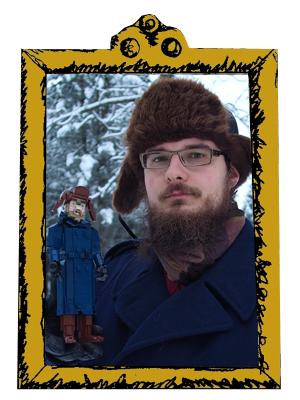
This was my large project of 2025. The idea goes even further back. We have been making large collaborative displays in my LUG since 2009. In 2023, we had a project called Suomalainen Kaupunki (a Finnish town or a city). It was made possible by Lego's Project Support program, and was very successful. Thus, in 2024, we applied for another round. Some wanted to make castle, some wanted to do pirates, some wanted to make town. And I had undestood that projects with national or local emphasis were more likely to get accepted. So I came up with the idea of History of Archipelago, with a very loose definition to fit in the various things.
Ultimately, the big event in Helsinki we were aiming for was cancelled, so we had three different incarnation of the collab instead. I missed the smallest in Espoo but partook the larger ones in Oulu and Seinäjoki last autumn. The final installation on Seinäjoki was the best one; the Oulu version was more open, almost empty. That's sea, though. Both links have photos I took of the installation (among other photos taken by other folk).
 |
| Photo: Museovirasto, HKK, CK. |
My contribution combines two of my favourite things: Finnish new style architecture of the early 20th century and Porco Rosso. I took the concept of Hotel Adriano, the hotel and club for seaplane pilots in the film, and reimagined it in Finnish natural stone. The main inspiration for the building was the Telephone Association Building in Helsinki, designed by Lars Sonck in 1903 and finished in 1905. I took the central element, the tower, and arranged it with element from Sonck's simulteneous masterpiece, the Tampere cathedral, which I can see from my window. Some elements, like the large window on the tower, are from the Telephone building's main drawings that diverge a bit from the executed design. And unlike Sonck's masterful blend of different granite types, I used solely light bley bricks. The differences in Lego colours are so much starker than on real stones, so the polychrome effect is impossible to capture without looking chaotic.

I wanted to have the building on a tall cliff to create a romantic composition. This way, the planes would not obscure the building, and I could make interesting walkways with the stairs. I built the landscape and the building simultaneously, using some loose candy boxes to hold the main tower on the right level while arranging the rocks below it. In general, I'm not the biggest fan of building rocks; in 2024, I got enough of them while building Vainolaista vastaan. Fortunately, a year was enough to recover for it. For a minute I considered using dark bley on the rocks, but light bley was so much better, as it gives lighter, more realistic look to the whole. Sure, it's the same colour with the bulk of the building here; but that was sensible, actually, as the granite of the building has been quarried on-site, from the same rock. With darker foundations and some plant life I was able to make a clear difference between the living rock and the walls. The rubble texture helps, too.

In addition to the form of the building, I knew I wanted to focus on interior. I think a cross section is the best way to show them - I've never liked those removable floors, as miniature worlds are difficult to perceive from the top view only, and they require active demonstration in exhibits. Here, I did not focus on history of architecture and detailed interior architecture of the early 20th century. Instead, I focused on making the Porco Rosso pastiche with more universal theme of "some arches". I set the main interior inside the cliff. Now, this isn't the most logical or realistic place for it, but on the other hand, it saved me from large boring grey wall, and enabled a space big enough without making the building itself too big. It's bit like Tardis, the building is bigger on the inside.
The club is not a direct replica of Adriano's club in Porco Rosso, but Gina's definitely there, as well as a bar counter, with lounging pilot that looks a bit like a hybrid between Porco and Curtis... Inspired by the film, I set some plane parts on th walls, and added some suspicious crooks amidst the customers. The stairs descent from the building quite logically, too. There's some architect's honour in me after all. The hall upstairs matches the aesthetics of the exterior more closely, but this space is almost completely obscured by the engine that is being tested - this is the Pavilion of the Seaplane Association, after all. The engine was inspired by the scene in Porco Rosso where Porco and Grandpa Piccolo test the Folgore engine in a shed. Furthermore, it reminds me of a MOC called Dwarfpunk Workshop from 2010.

I began this model with the roof, and it's the most important part of it for me. Large, handsome and tall roofs are great - the emphasise the protective qualities of the building. They are homely and sheltering. Christopher Alexander stressed this, and while I don't agree with his every pattern language pattern, I agree with the one about roofs. Tiled roofs with lively, organic hues are especially beautiful. They appeared in several major Finnish Art Nouveau buildings, but almost all of them have been replaced by metal during the last century. The tiled roof on the Helsinki Telephone Association building was replaced with copper sheet soon after Sonck's death, so I wanted to recreate it here.
I'm rather happy with it. The geometry is simple - a square frame with studs outwards, getting smaller one stud at time. The geometry is less simple, as the horizontal difference per layer is 1/2 studs. This is easy in one direction (jumper plates) but almost impossible in the "upwards" direction (which is not upwards as such here, but more like... inwards). Once again, the freely sliding connections solved this, and one piece especially: 88072 Plate Special 1 x 2 with Bar Up [Horizontal Arm 5mm]. It has the jumper quality on direction Y and the freely sliding bar connection in the other. Brilliant! There are four on each level, and the roof pyramid is hollow. I topped the pyramid with the lovely parabolic rocket cone halves, and used two more to cap the bay window things on the both ends of the building. The chimney is inspired by the one on the Tampere Cathedral's sacristy. I was so happy that I could just step outside the house to check it out, and then return to my library room to build it.

To feel like a Seaplane Association Pavilion, the model had to have some seaplanes. At least two, to make the point, I felt. The blue one is the Curtiss R3C-0 from Porco Rosso, closely based on the real-life American floatplane. I had built Porco's plane in Miniland scale, and as the film is my all-time favourite, it felt right to built the other major plane from it. The yellow plane is based on Macchi M.17, a real-life Italian flying boat, but isn't a direct scale model of it. Having both floatplane and flying boat felt like a good way to show the diversity of seaplanes.
I'll post individual posts on the planes later on (currently they are in an exhibit, and the Macchi needs some extra parts on the bottom of its hull for flying shots). The exhibit is (once again) in Messukylä Library, Tampere, and ends in 8th of April. It's called Ver Sacrum and has other MOCs, too, including an unpublished one (that I will publish before the exhibit ends). Here's the poster, and after it, the rest of the photos. Bye!
-Eero.

 Väinämöinen needed a big, bushy beard, and the large wing pieces worked perfectly: I wonder why I hadn't used them before this way. I've used the smaller wing pieces as facial hair numerous times, after all. The heavy moustache uses a croissant piece, but the stache needed to be longer to capture the vibe I liked in the painting. I learned that there are two croissant moulds, one with rounded ends and one with regular flat bar ends. The latter enabled connection with 1x2 round plates with hole, which again connected to the white frogs. There are more frogs on the muttoncops. The eyebrows use mug plates made thicker with Technic pins - a tech I picked up from someone, but I didn't find the original picture. Round eye have sort of unnatural stare, and covering bit of their upper halves make the characters look more human.